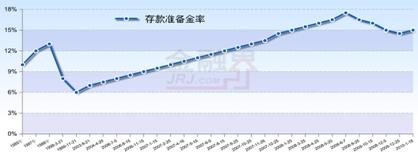
Description the macro-control of china in the period of financial crisisIn 2008 the global financial crisis that triggered by sub-prime crisis in the United States has spreaded to many countries. China, as an open economy, has also been affected a lot in this crisis, the Chinese government issued a series of regulations to cope with the crises and ensure steady economic growth, which resulted in a growth rate of 8,7 \% in 2009. Since the financial crisis, the series of regulatory policies of the Chinese government was related to various aspects of real economy of China. The policies are highly targeted so that they could promote the recovery of the economy in a relatively short period of time. This article will briefly introduce China’s specific regulatory policies on consumption, investment and import and export areas. Also it will tell us the actual changes in economic conditions after the measure comes into force so that it would be a reference for other countries as the management of financial crisis. I. Brief Introduction of the economic situation in China in the financial crisis The impact of the financial crisis on Chinese economy is mainly reflected in the real economy. The basic reason is the rapid deterioration of the international economic environment leading to decline in China’s exports. So the economic growth rate of China declines. Expansionary fiscal policy and monetary policy are consistent with the views of mainstream economics in this case. However, China faces a very complicated economic situation .Firstly, the macro economy of China is overheated before the financial crisis. They are taken tightening of regulatory policy before September in 2008. In 2008 the central bank has continuously raised the deposit reserve ratio five times after raising it several times in 2007. Thus, to some extent, the financial crisis reduces the inflationary pressure in China. Secondly, The China’s economic structure obviously imbalances, for example, the proportion of investment in GDP is too small, consumption accounts for too large proportion of GDP , and the industry experiences uneven development. Lastly, China’s income distribution gap is too large, health, education, social security have a low level of services. As a result, China decisively changed the direction of macroeconomic regulation and control after the finance crisis, implemented a proactive fiscal policy and loose monetary policy in order to further expand domestic demand and promote stable and rapid economic growth. At the same time, government spent 4 trillion and focused on the adjustment of the imbalance of economic structure. Finally we achieved a steady economic development. China’s macro-control policy is not a single stimulus policies, but rather a wide range of policy .These major policy measures as a whole target both symptoms and root causes, and address both immediate and long-term concerns. They represent a holistic approach and are mutually reinforcing. They are designed to address the need to boost domestic demand, readjust and reinvigorate industries, encourage scientific innovation and strengthen social security. They are designed to stimulate consumption through increased investment, overcome the current difficulties with long-term development in mind, and promote economic growth in the interest of people’s livelihood. These measures can mobilize all resources to meet the current crisis. II. Analysis of present policies and its effects in china 1. Analysis on the effects of positive fiscal policy Expanding domestic demand is the core of positive fiscal policy objectives. Fiscal policy have been taken include massive increases in government spending, implement a structural tax cut , reduce or eliminate Some of the projects fees, increase financial subsidies and transfer payments, etc. (1). Substantially increase government spending and implement a structural tax cut. The Chinese Government has rolled out a two-year program involving a total investment of RMB 4 trillion. The investment will mainly go to government-subsidized housing projects, projects concerning the well-being of rural residents, railway construction and other infrastructural projects, environmental protection projects and post-earthquake recovery and reconstruction. Some of them are identified as priority projects in China’s 11th Five-Year Plan for Economic and Social Development. The rest are additional ones to meet the needs of the new situation. (2). The Chinese Government has also launched a massive tax cut program which features the comprehensive transformation of the value-added tax, the adoption of preferential tax policies for small and medium-sized enterprises (SMEs) and real estate transactions, and the abolition or suspension of 100 items of administrative fees. It is expected to bring about a total saving of RMB 500 billion for businesses and households each year. (3). Accelerate the establishment of a unified, standardized and transparent system for transfer payments, enlarge the size and proportion of general transfer payments, and increase input in public services. We will do all the work of implementing the programs for bringing home appliances, agricultural machinery, and automobiles and motorbikes to the countryside well, and we will make effective and flexible use of the 40 billion RMB in central government subsidies provided to get enterprises to increase their sales and enable farmers to enjoy real benefits. 2. Analysis on the effects of moderately easy monetary policy (1). Frequently cut interest rates and increase liquidity in the banking system. The central bank has cut deposit and lending rates of financial institutions five times in a row, with the one-year benchmark deposit and lending rates down by 1.89 percentage points and 2.16 percentage points respectively. Thus the financial burden of companies has been greatly reduced. The required reserve ratio has been lowered four times, adding up to a total reduction of 2 percentage points for large financial institutions and 4 percentage points for small and medium-sized ones. This has released around RMB 800 billion of liquidity and substantially increased funds available to commercial banks. (2). Increased credit support to SMEs. A series of policy measures have been adopted in the financial sector to boost economic growth, including increasing lending, optimizing the credit structure, and providing greater financial support to agriculture and the SMEs. For the central bank issued a series of measures to solve the difficulties of financing for SMEs after financial Crisis. In early August 2008, The previous adjustment of the central bank deposit reserve ratio charts raise the credit scale of national commercial banks up by 5 \%, local commercial banks up by 10 \%. This increase of about 2,000 billion credit, further broaden the financing channels for SMEs.
3. Other policies (1). Implement the industrial restructuring and rejuvenation program on a large scale. We are seizing the opportunity to push ahead comprehensive industrial restructuring and upgrading. (2). Financial support policies are being improved, a sound credit guarantee system installed and market access eased for the benefit of SMEs development. They include that 1) Fiscal policy to play a leading role to accelerate the transformation of the development pattern of SMEs.2) Actively encourage innovation and upgrading in science and technology in the SMEs.3) Financial support policies are being improved, a sound credit guarantee system installed and market access eased for the benefit of SME development.4) The Chinese Government has also launched a massive tax cut program which features the adoption of preferential tax policies for SMEs.5) Perfect the system of government buy-out in china to expand SME market space.6) Reduce the administrative costs to reduce the bourdon of medium and small enterprises. III. Summary Through the above analysis, we can see that although current crisis has inflicted a rather big impact on China’s economy, we have made timely adjustment. However, the policies have some defect. So let’s briefly summarize the shortcomings of these policies so as to provide some reference out of the shadow of financial crisis as soon as possible. Firstly, there is unclear division of labor between fiscal policy and monetary policy. Usually, the monetary policy is suitable for volume adjustment and fiscal policy is more suitable for structural adjustment. But in practice fiscal policy did not play the role of regulating the structure which had led to the slow adjustment of industrial structure in China. Secondly, the making of fiscal policy and monetary policy lack of adequate coordination. In the policy making process, the two departments lack adequate consultation so that the macro-control policies can not be coordinated. Thirdly, two policies can not complement each other in the process of significantly accelerating the transformation of the development pattern and improving the socialist market economy such as government bond issuing, interest rate adjustment, reforming of state-owned enterprises.
РОЗДІЛ ІІ Пріоритети та підходи державного управління щодо стабілізації та виходу економіки України з кризового стану
УДК 338.1 М. М. Александрова |
|

